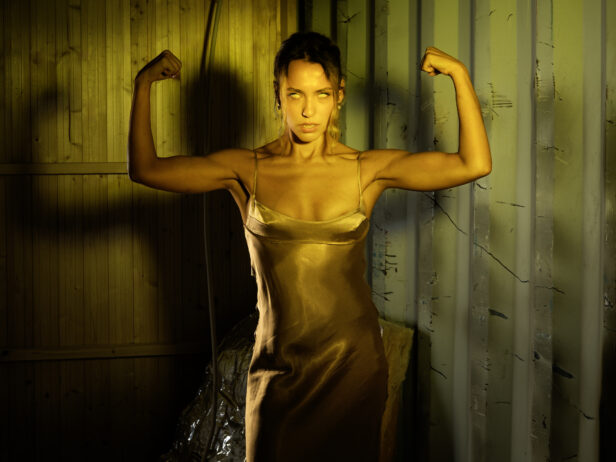
INTERVIEW WITH Margarida Constantino
Margarida Constantino is an artist, performer, and dance theater maker based in the Netherlands. Dedicated to fostering collaboration between different practices and performance vocabularies, she uses dance and spoken text as her main vehicles for storytelling. Her work is quirky, ironic, and inevitably social, very contrasting within itself- punk performances, theatrical dancy dance that aims to disrespect the conventions of theater, and contemporary comic tragedies.
Originally from Portugal, Constantino graduated from ArtEZ University of the Arts and has been based in the Netherlands since 2017. She worked with Nicole Beutler Projects (NL) and Companhia Instável (PT), where she was a resident artist twice. From 2021 to 2023, she was a dancer for LeineRoebana (NL).
She has choreographed for films, including Almost Like Home, Tao Naar Dis, and SCAPEGOAT, and created performances such as Sagração de quem Era, SELF-HELP: How to Make Babies, Have a Career and Eat Organic, Rite van wat Was, and Grains of Noise, presented at festivals and theaters including Bluest Monday Festival, Movies that Matter Festival, Café Theater Festival Utrecht, Delft Fringe, Amsterdam Fringe, Zingende Beelden, Cinedans, Vondelpark Openluchttheater, Frascati, and Theater a/d Rijn.
She performed for Henry Rodriguez, Christina Mastori, LeineRoebana, Carine Grizzo for PluggedLiveShows. Last year she worked as a performer for Lea Ellemann, co-production with Ulrike Quade Company and Event Robotics, as a actor and dancer for The Circle of Truth: Part II, and in her own work. She currently performs in NOW WE ARE EARTH / An Orchestra by Nicole Beutler (co-production with Opera Ballet Vlaanderen), is pursuing a master’s degree in theater directing at RITCS in Brussels, working with puppeteer Wojciech Stachura helping his vision come to life, and is project managing and creating new works for Platano.
How would you describe your artistic practice today? What are the primary themes and questions driving your current work?
Today my work lives where body and memory meet. I ask how a story becomes urgent when told through the scars, contexts, and inheritances. I circle themes of nature before us, and the weight of history on women, my relationship with it, the noise we carry.
I am an artist. Dancer and theater maker, and all 100 jobs that implies. Being Dance my birthplace as an artist, I always return to the body- situated, political, and unavoidably restless. My work moves through themes of environmental atonement, gendered oppression, and the rewriting of historical narratives. I see the body as both a site of memory and a tool of imagination, carrying traces of lived histories that shape how stories unfold.
Anger and love .
Your work blends diverse vocabularies—activist performance, dramaturgy, socially conscious choreography, and an embodied research method you coined, Situated Movement. What sparked the development of this methodology, and how has it evolved?
‘Situated Movement’ was my bachelor’s thesis. It grew out of the principles of situatedness theory, as articulated by Donna Haraway and Lucy Suchman, who argue that knowledge and meaning are never universal but always partial, embodied, and context-dependent. For me, this means that every performer’s background- social, cultural, political- carries traces that cannot be erased and should instead become the ground for storytelling.
Urgency arises when choreography is not abstracted from life, but when a performer’s lived history shapes the work: gestures from daily life, cultural inheritances, even contradictions. Over time, I’ve developed ‘ Situated Movement ’ into a practice that weaves these embodied contexts into performance, so that stories are not imposed but emerge from the performer’s presence, making each work both personal and political.
The second part of this methodology is a compositional study that directly connects language to movement. Here, the body is both situated and detached: practically, it becomes a useful tool, yet conceptually it reverses the act of situating by abstracting words into spatial form. I use a simple structure like the Laban cube and, inspired by Trisha Brown’s Locus (1975), follow a diagrammatic score in which each point of the cube corresponds to one of the twenty-six letters of the alphabet. In this way, language is translated into movement. A score to literally dance words.
Collaboration seems to be a central pillar of your process—working with fellow performers, filmmakers, choreographers, and across cultures. What have these collaborative experiences taught you, and how do they shape your own authorship as a maker?
Nothing makes itself. Collaboration is not something you do for fun because it’s gezellig … it’s intrinsic to creation. If you fly solo you are probably extracting to some extent. My ideas are not mine. My ideas are life experiences that I related to when I was constructing a sense of self for myself. Even this was something I read that I related to.
When building a concept in the early stages of creation, my collaborators are not exactly people. I read and watch youtube videos about certain people, I ask AI to tell me the controversial parts of my research, I talk to other artists about it. I situate certain authors, contextualize my work in their universe and puzzle it all together. Then I grab this snow ball, sit my people down and share with them.
Another important part of a creative process for me is trust and care. I like to work with people I love and make me feel loved. Surrendering your heart in a public way is emotionally very draining and damaging, you need all the support you can get.
As a creator navigating both institutional and freelance landscapes, what challenges do you face when initiating new work?
There are three things I consider when selecting a project:
1) Are the people nice? You need to feel safe. To bear the demands of the profession many dancers have transformed and transcended their abilities only for their expectations and idea of self to be rejected and denied. In addition, when you do get selected, there is a lack of kindness in my field that comes from unfulfilled individuals projecting their trauma onto others. And then there are those who, whether aware or not, expect the wrong thing from you, feeding on hope and insecurities.
2) Is it artistically rewarding? We need to keep growing and evolving. Diving into other creative minds is our school after we graduate.This for me is not always important as a performer because I create my own work in pursuit of artistic reward, and perhaps I have been lucky with the people I work for.
3) Will it pay respectfully in relation to my value? Money. At first, we give freely- our time, energy, imagination- but generosity is often mistaken for weakness. Working under your value decreases your value. Pay my people what they deserve, and I’ll give you the world.
If the answer is Yes to only one of these, say No.
Can you share more about your current projects?
I am making and performing through Platano, my own little ecosystem, where I create my own work and in collaboration with others. I am working as a performer for Nicole Beutler Projects where I dance and sing and all sorts of things. I play and build worlds with puppeteer Wojciech Stachura helping his vision come to life. I am also pursuing a master’s degree in theater directing at RITCS in Brussels.
This is just this month. Being an artist implies projects that constantly multiply, random collaborations of all scales, I’m in perpetual surprise and the world is my oyster.
Your work does not always follow conventional or mainstream aesthetics. Who is your ideal audience, and what kind of relationship do you hope to create with them through your work?
I want my audience to be uncomfortable. To feel something unfamiliar, something that scratches at their assumptions and leaves a trace, yet not a scar. I hope to create a space where they can confront, reflect, and perhaps recognize themselves in unexpected ways, where the work is not easy, but necessary. A little bit cringy and awkward and human. Break some hearts while rooting for love, with dark humor and unladylike behaviour.
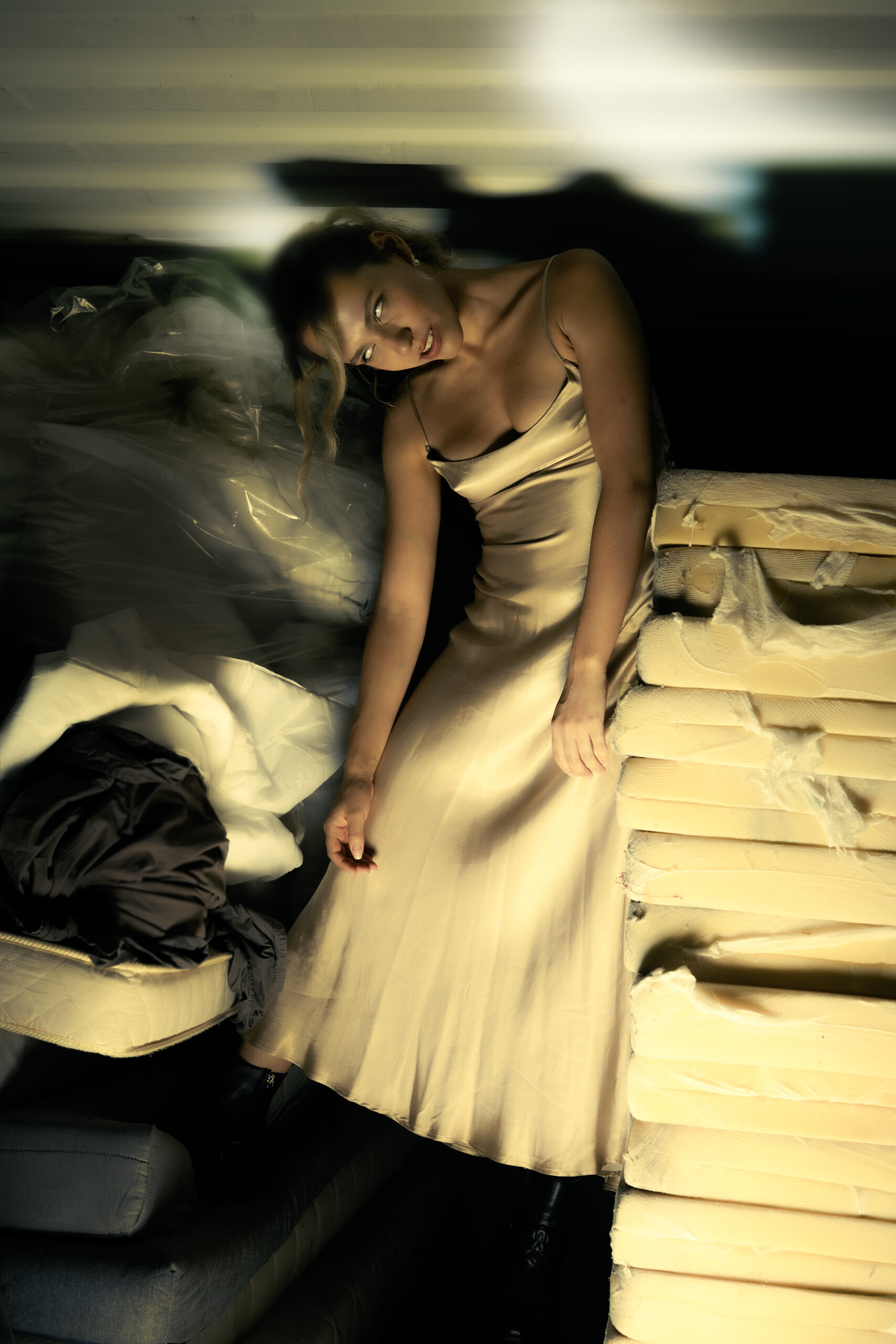
Having been based in the Netherlands since 2017, what are your thoughts on the Amsterdam art scene? How has being part of WOW Lieven influenced your network or perspective as an artist?
Artistically I don’t find the Amsterdam scene very inspiring. I value urgency and relevance above all. When there’s too many resources and no practical life experience, there is no urgency. It’s important that whoever is reading this understands that I am not saying an artist should struggle to have a voice. I am saying that privilege can be blinding to what really matters. I too have struggled to grow my privilege and I now see my urgency being washed away by comfort. I also appreciate a certain level of craftsmanship. It means someone cares enough to put in the time and have integrity within their belief system. Nevertheless, technical work that is purely aesthetic is elitist and not generous. It is made for other artists and not to share with people or invite audiences. It drives people away from the arts. On another note, sometimes when artists do have the time to research and construct an urgent message it may take time away from craftsmanship.
This is why I believe in collaboration where everyone brings something to the table, and WOW is a playground for multidisciplinary collaboration tingling of opportunity.
Financial sustainability is a major concern for independent artists. How do you navigate this challenge while remaining true to your political and artistic values?
Financial sustainability is not a challenge for me, I make sure of it. Yet we live in society. My values are constantly being broken by the conditions that surround me, much like everyone else that is not part of the 1%. I strive for integrity, making choices that honor my principles, to listen, and respect others.
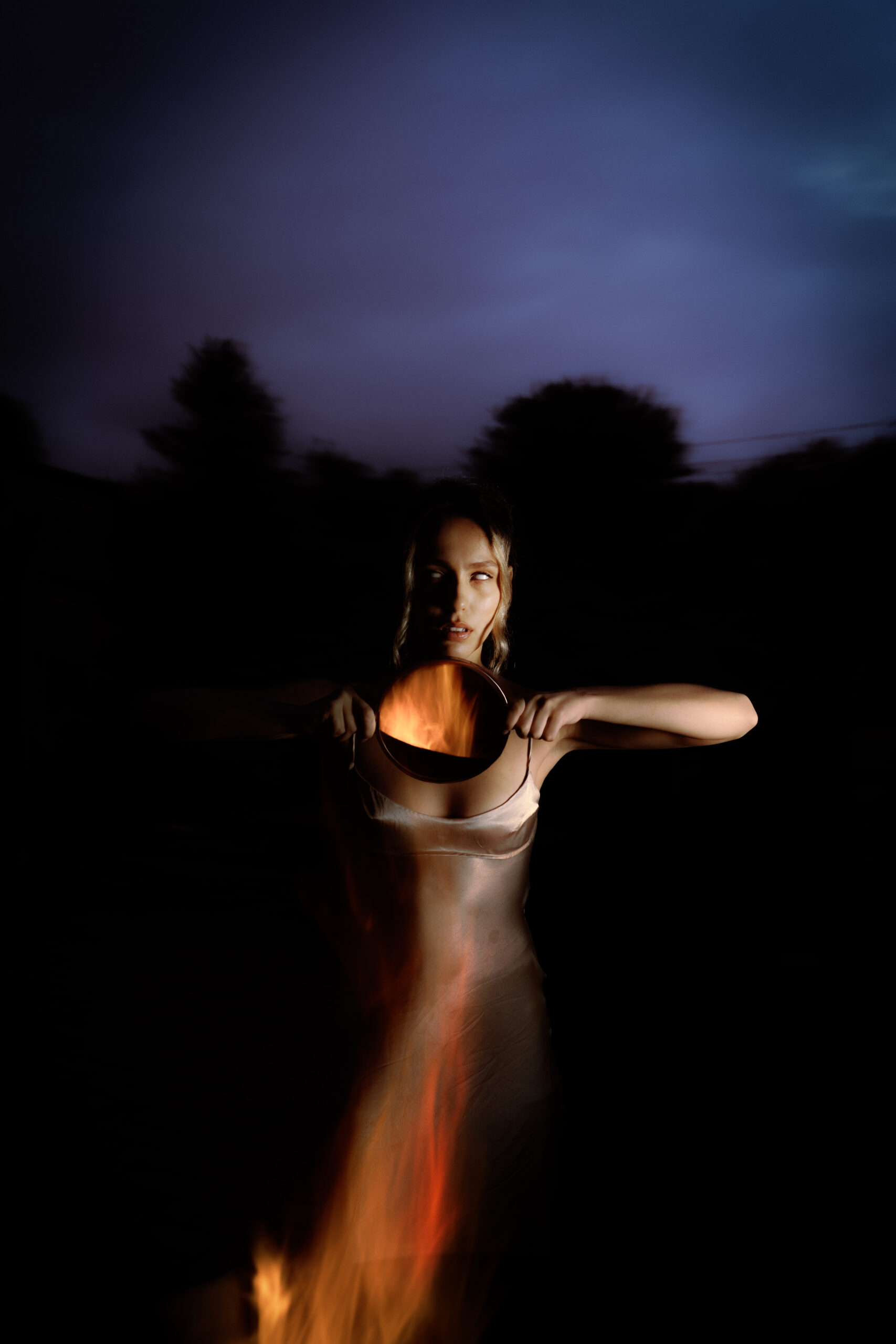
What five elements would you say are essential for building a sustainable, long-term artistic practice—both creatively and practically?
Resilience, ego death, love, doubt and kindness.
Where do you see yourself—artistically and personally—over the next few years? Do you work toward a plan, or do you let intuition guide you?
As much of a planner that I am, I like to think of it as a bucket list in conversation with the universe. I pass the milestones one by one considering each time whether I am still that little girl who wanted to dance and question the world. I have very clear dreams and I’m fighting for my turn.
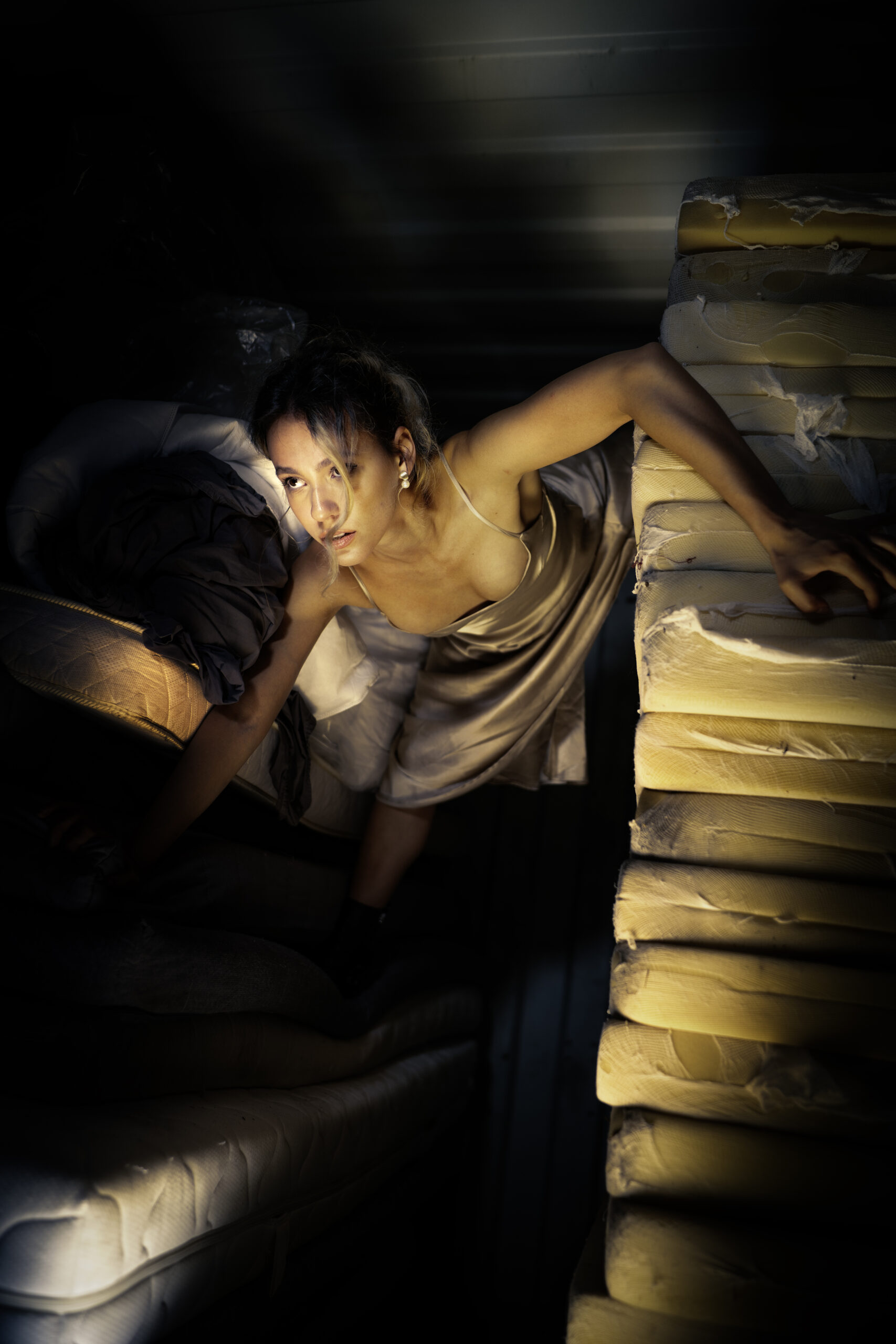
How do you recharge creatively and emotionally?
I start a new project.
If you could be reincarnated as a plant or animal, what would you choose and why?
I would be reincarnated as a straight white male, to wander through rooms where my voice carries weight without effort, where presence alone summons respect. To move through the world and watch the bare minimum unfold as extraordinary, to trace the curious geometry of privilege, to inhabit a form where invisibility and entitlement entwine, and to feel the strange gravity of being considered ‘special’ simply by existing within certain frames of expectation.
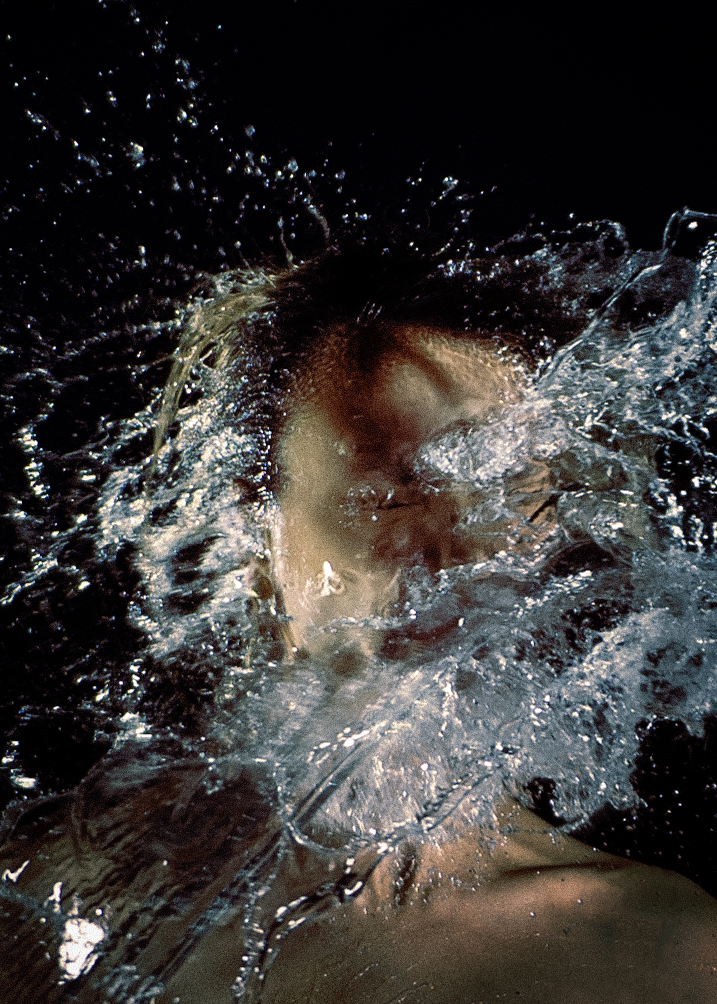
Photos by Roman Ermolaev
by WOW