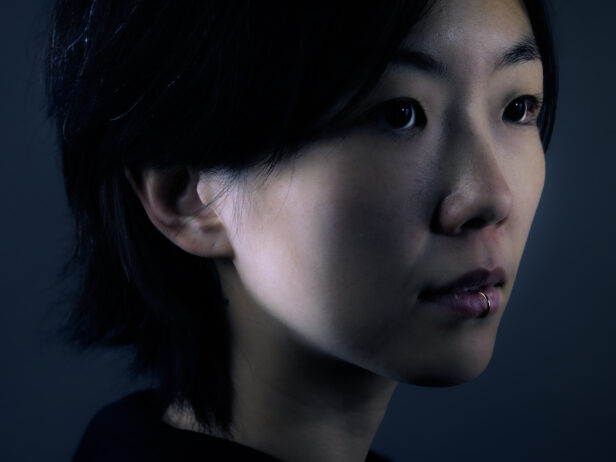
INTERVIEW WITH ELERI LEE
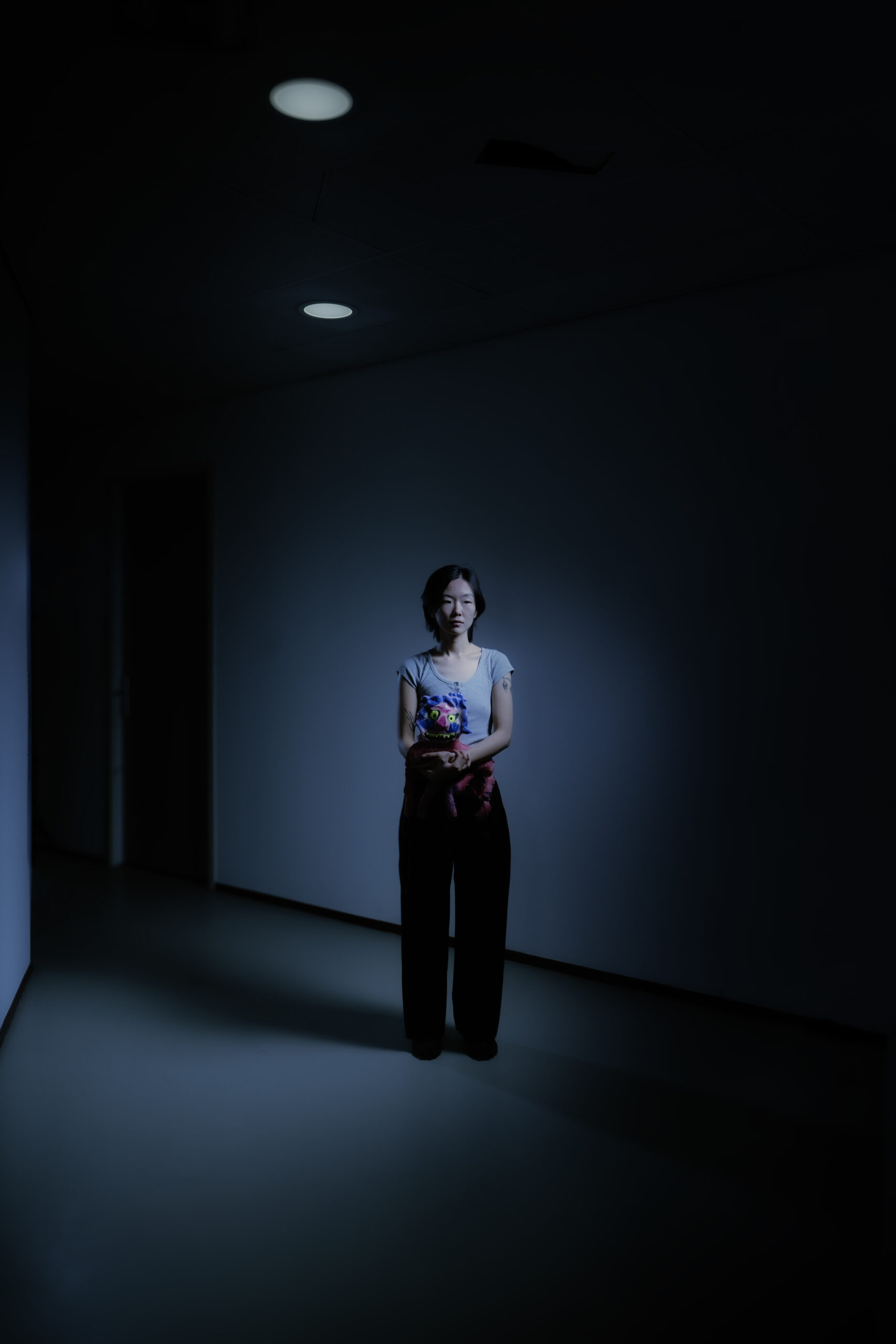
Eleri Wonkyeol Lee was born and raised in South Korea and studied at the dept. of fine arts at Seoul National University and graduated from the Gerrit Rietveld Academie in 2024. At her first bachelor’s, she focused on figurative painting and worked as an actor for independent films in Korea. Using hertheatrical experience, within her films, she uses narration to move across the hereditary chain of her life.
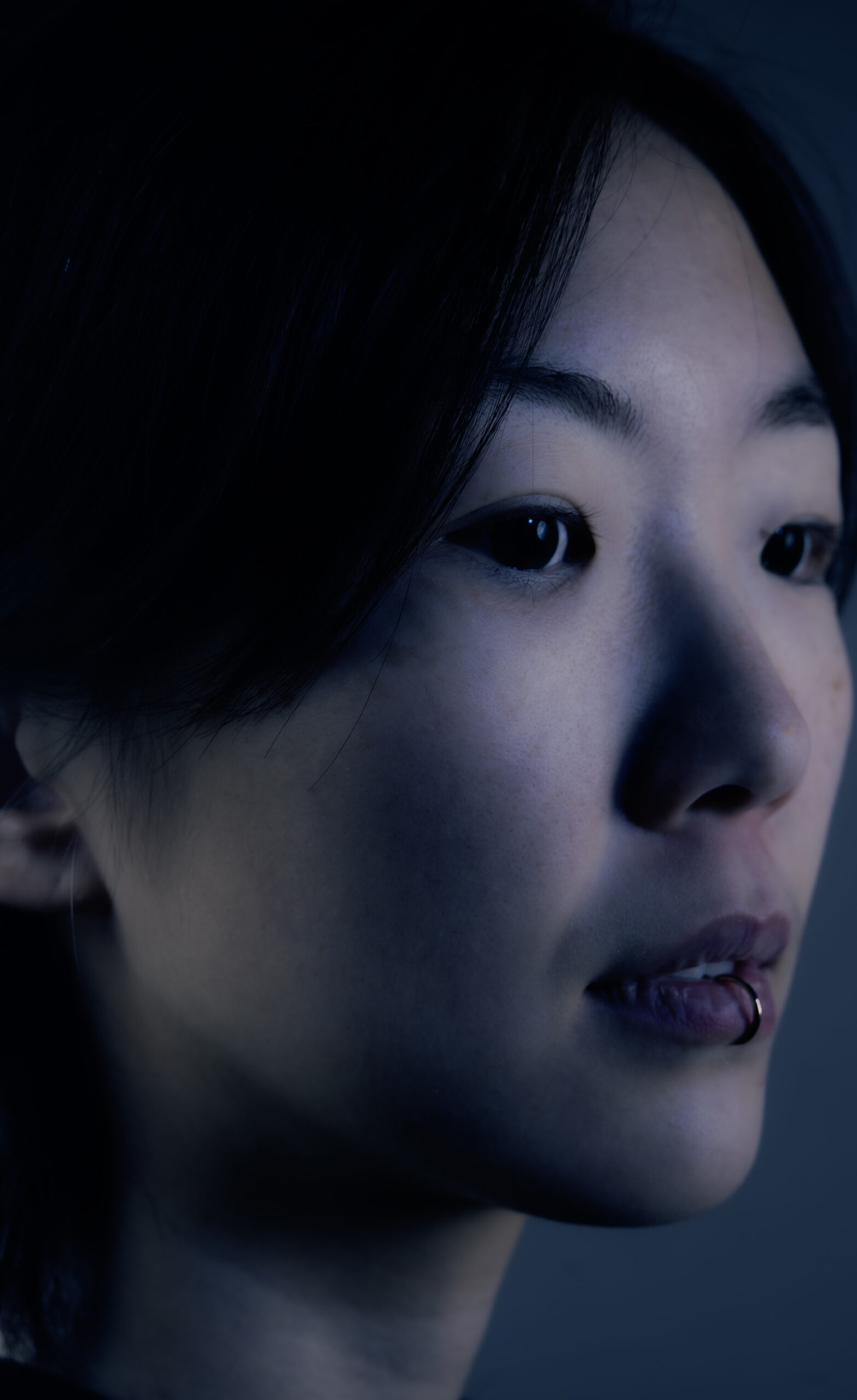
– How would you describe your artistic practice today?What are the primary themes and questions driving your current work?
My projects are strongly based on shamanism and the human mind. I’m always very much into old stories that have been carried by various forms, and how they are conveyed to me. My research is mostly about the history of a certain monument(character), and I implement that research into my own life, making a fiction video with my own self as an alter ego.
– Can you tell us more about how you begin a new work?How do you start carving out ideas and translating them into form?
It comes from daily imagining, trying to link the original artifact to my life now. For example, from my last project, I brought a dragon feature and kite flying tradition as the ideal of myself, who is often represented as a weather god in ancient Asian mythology. And I made a setting of how the weather metaphors the human mind, and this was followed by a poetic storyline of how I get to manage a storm in my mind and how I get to successfully fly the kite.
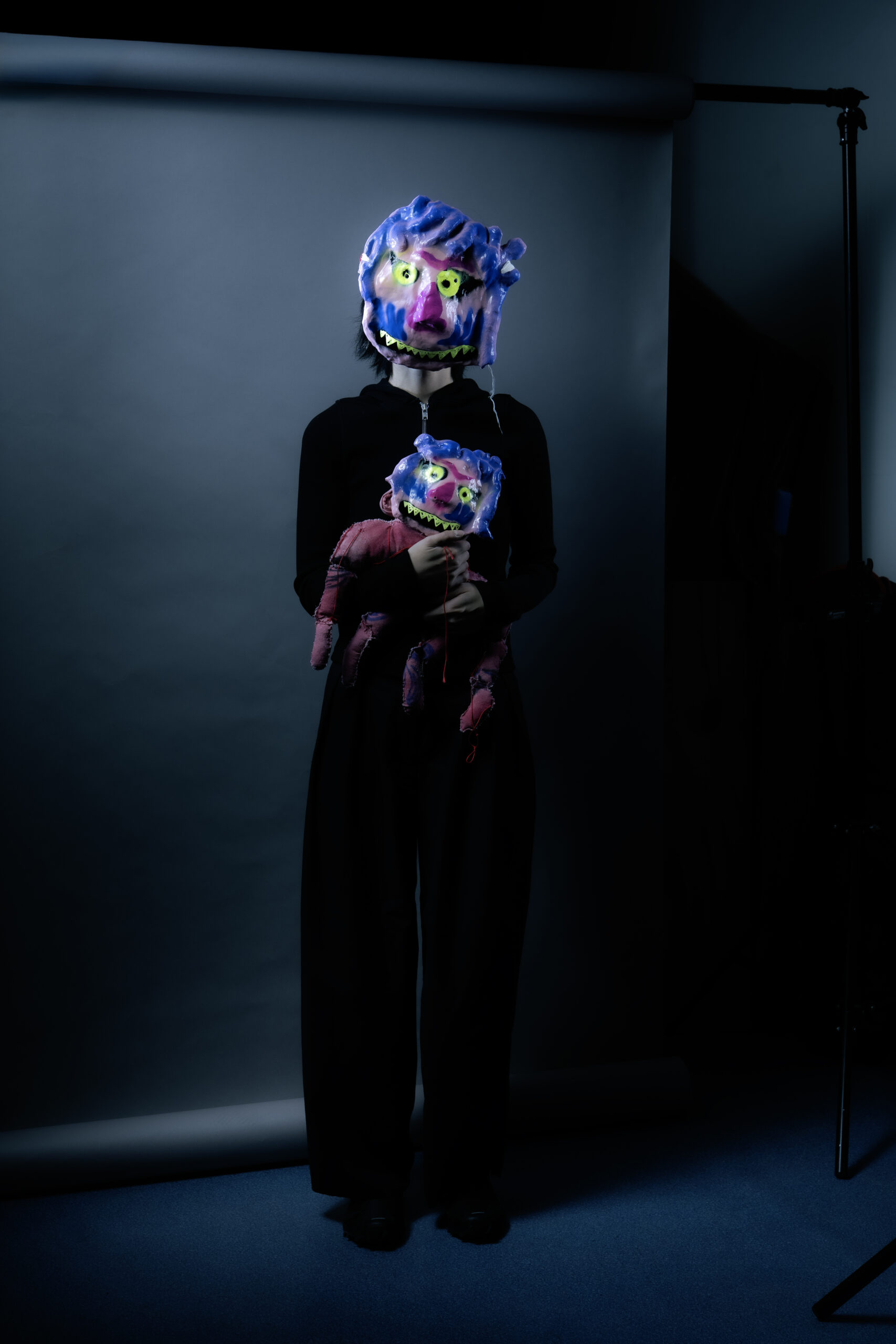
– You recently graduated from the Gerrit Rietveld Academie.Can you tell us about your experience there? Would you recommend the school, and why or why not?
I have two different bachelor’s degrees, both in art. But they are so different from each other. First art university that I went to was very much academic, and the courses were strongly based on art history and theory. And the second one was Rietveld, which was based more on curiosity and experimentation. The combination of these two developed me in both experimental freedom and theoretical background. I would recommend Rietveld to people who are naturally in love with reading, but dare to try some artsy fartsy experiment. It worked so well in my case.
– Can you share more about your current projects?What are you working on now, and what new directions are you exploring?
Since I had worked with connecting old traditions into my daily life, it was natural that I often dug into the history. From focusing on my own mind as an individual, I’m trying to extend my story into society and the communal memory. I’m making a project about a mermaid, who is representing the female free divers in Jeju Island, and exploring the culture-labor-colonialism combos and what I can do in the context. Before this project, I usually brought up my personal experience to lead the storyline, but with this one, I’m jumping into a historical story and figuring out what I can do. This is making me feel how powerless I am, but also guiding me to dream weirdly.
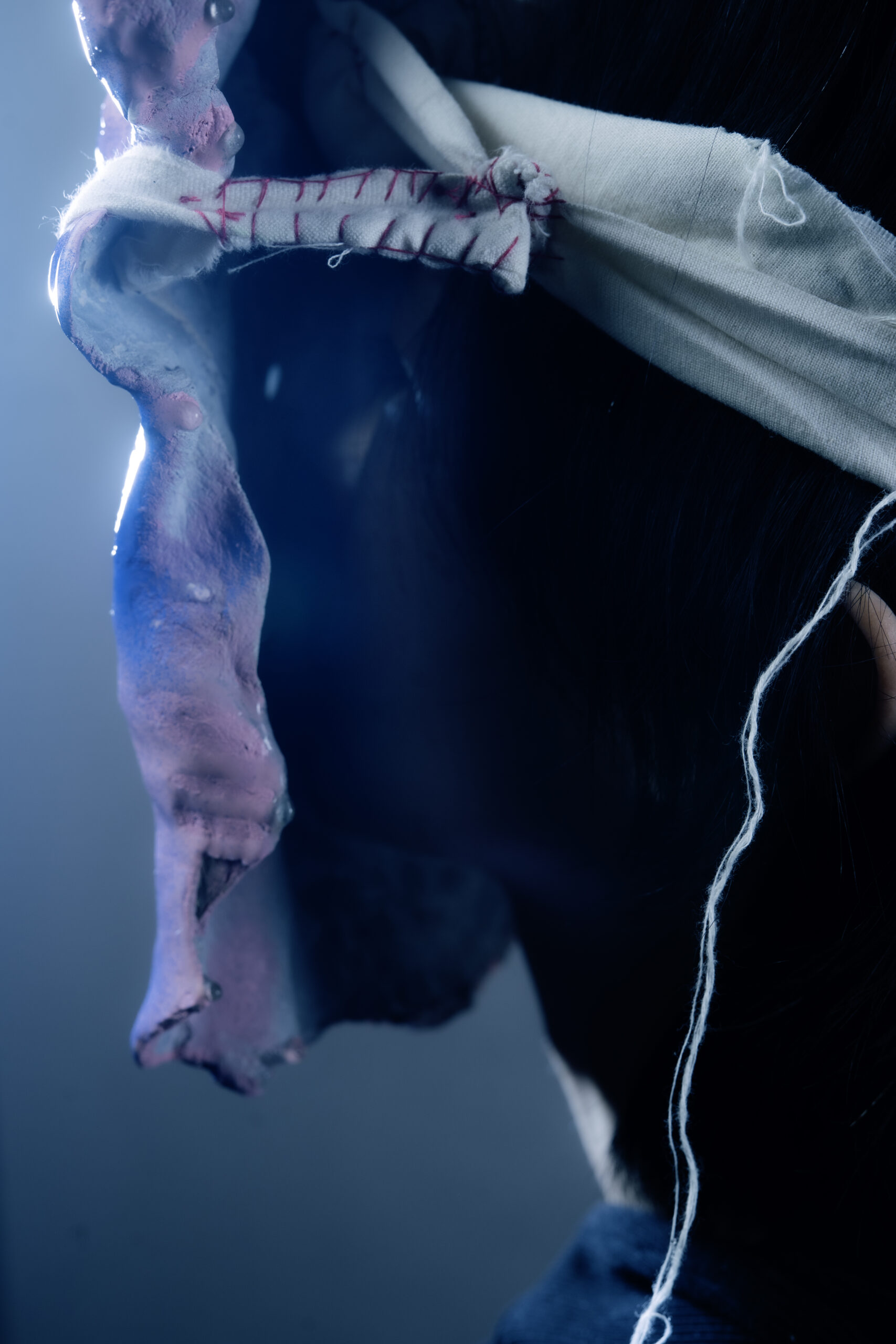
– In your artistic statement, you place a strong emphasis on humour, describing it as playing a dual role: both a tool and a safe space.What kind of humour is this? Is it closer to dark humour with sinister undertones, or does it lean toward something lighter or more playful?
I would say very light and playful way. Usually, the contexts that I get to pick contain the pain that is heavy. I don’t want to make a tragedy out of tragedy; I want to make a comedy out of tragedy. Opposite to Shakesphere, I believe that Life is a comedy when seen in close-up, but a tragedy in long-shot. Based on this faith, I make comedies out of myself lightly, but sometimes people see it as a tragedy. Though I wish the audience would enjoy it lightly, not as a heavy one, but rather as a joke.
– You mention that your work navigates between concepts of past and present—two temporalities that leak into each other.Do you feel this connection is always persistent, or can it fracture or dissolve under the pressures and turmoil of the present moment?
No, I don’t feel in my daily life at all, and I think that’s why I can freely work in that stupid imagination. I’m a very realistic logic-based person, and actually never was into superstition or fiction before I started art. Maybe the lack of that aspect in myself led me to dive into fiction, to play and fully be in a different world. It’s still a playful, exciting amusement park for me. But maybe after 10 years, I would feel it’s dissolving into my reality.
– What is your general attitude toward the past?The past is often expected to be “respected” in a reverent or solemn way—do you feel that impulse, or do you allow yourself to detach from historical relics and traditions?
I think there’s always a reason behind certain history. I don’t necessarily respect them always, but I try to trace how it has come to be obeyed. I think I’m good at being detached from the context and thinking about it in a twisted way, but when something clicks in my mind, and I’m not able to be detached, that’s the time I start the new project.
– You’ve said that you’ve begun using strategies inspired by shamanistic structures in your work.Could you elaborate on this? And do you think there is a place for such structures in contemporary life beyond art’s performative logic and narrative frameworks?
I think the core elements of them are still here, but in different forms. For example, there was a secret Demeter shamanism festival in ancient Greece. It consists of three days of camping in the mountains, including singing, dancing, drinking, and drugs. For me, this sounds familiar with the Dekamental festival happening in Amsterdam bos, people trying to enjoy their summer outside of their daily life routine. I’m just insisting and proving this in my fiction, and sometimes I don’t even feel any necessity to show my work since it has been here successfully without me.
– What are your thoughts on the Amsterdam art scene?How has being part of WOW Lieven shaped your artistic perspective or professional network?
People are really sweet, and I feel very welcomed. One of the good things about living in an artist building is that you don’t have to try hard to find a common topic in the conversation; it comes up naturally. I’ve been feeling very welcomed and have had a few inspiring evenings with my neighbors, and I feel grateful that I’m surrounded by these people.
– Financial sustainability is a major concern for independent artists.How do you navigate this challenge while staying true to your political and artistic values?
To be honest, I’m completely lost with it, since I just got out of an unhealthy rent-paying job. Though I’m trying to have a side job which does not cross my morals in general, at least, not having a harassing boss who wants to touch my ass.
– What five elements do you consider essential for building a sustainable, long-term artistic practice—both creatively and practically?
I think the very first one is a strong drive to product, which will protect the artist as an artist, whatever they encounter. The second one can be the health, both in mind and body, to sustain a sincere daily life independently, without collapsing. The third is being lucky with having good people at the right moment, to feed and protect their ego. The fourth one is money, including the ability to get funding. The fifth is endurance, to endure some times to get all these qualities.
– Where do you see yourself artistically and personally over the next few years?Do you follow a defined plan, or do you allow intuition to guide your path?
I already have 3 more projects in my mind, which will take at least three years. These ideas came during my break time naturally, and I always feel like being chased by ideas and trying to implement them on time. Always stacks of plans put pressure on me.
– How do you recharge creatively and emotionally?
I love gaming and am pretty much serious about it, and when I’m too stressed, I just lock myself up in Steam for a few days and play a bunch of computer games. For me, it feels like feeling fresh after working out.
– If you could be reincarnated as a plant or an animal, what would you choose—and why?
I think I’ll be a horse, since running is their instinct. Whoever they put on their back, whoever uses their running, horses just run and seem like it’s engraved in their mind. I admire their attitude toward being in the present.
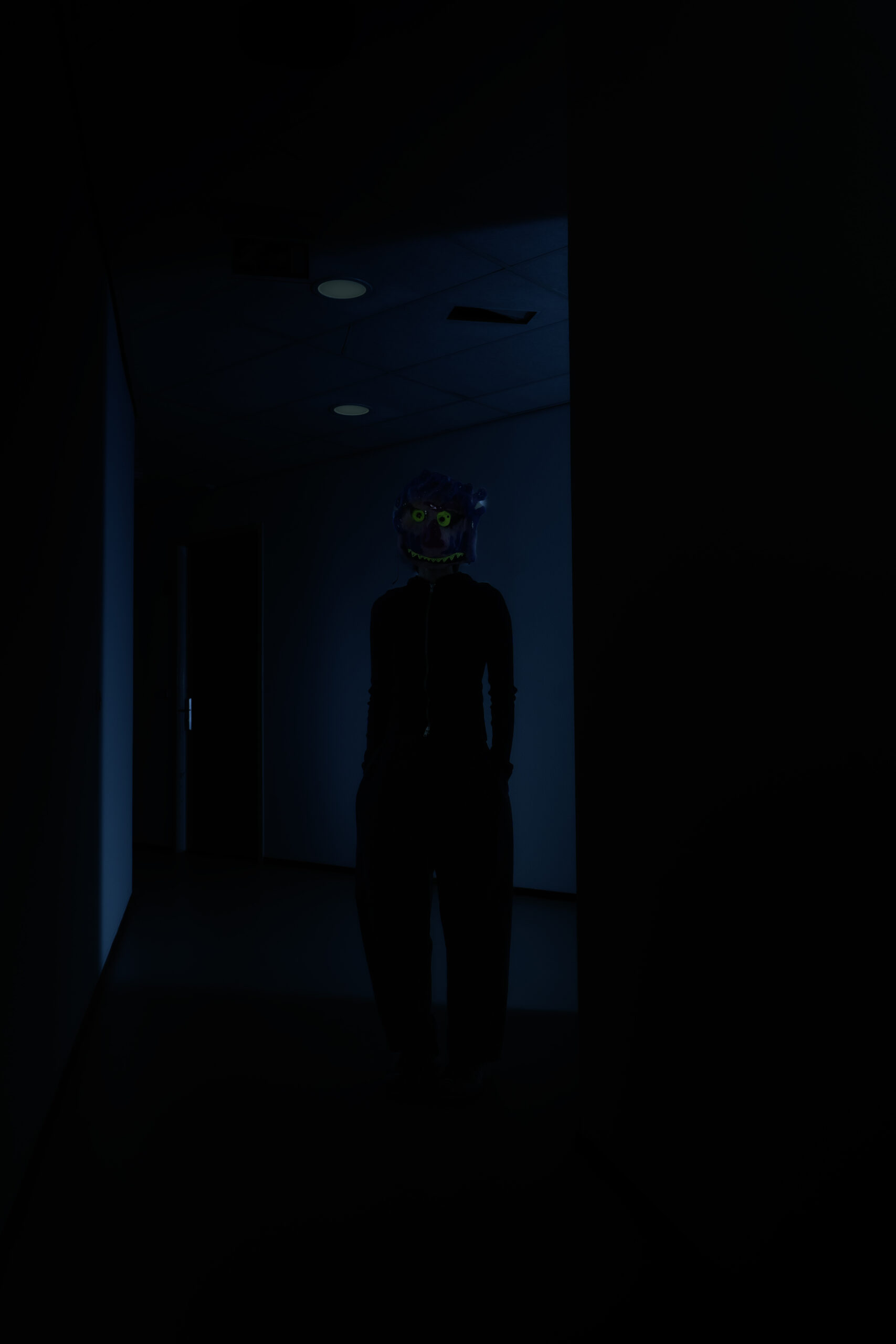
PHOTOS BY ROMAN ERMOLAEV
by WOW