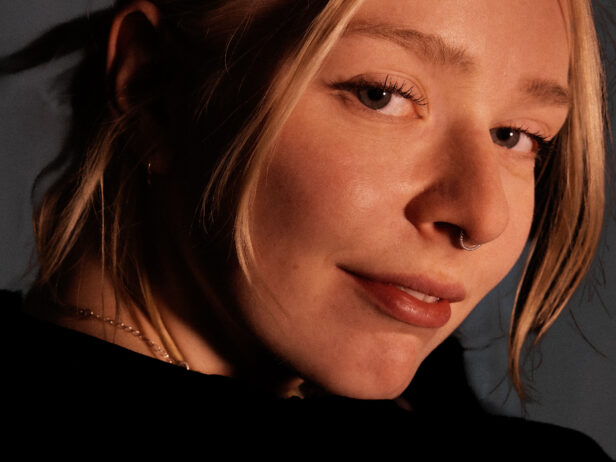
INTERVIEW WITH Bjørk Semey
Bjørk Semey is a double bass player and composer based in Amsterdam. Primarily residing in musical contexts, she collaborates with interdisciplinary fields and has an explorative approach to her work.
-How would you describe your artistic practice today?
My practice has always consisted of many things, with music being my main context in which I reside. I try as best I can to always jump on to things, to explore what is new to me, to seek out the eclectic, and keeping my own standard in whatever I do. In recent years I have worked more in multidisciplinary scenes and it’s very meaningful to me when I get to collaborate with other artists from different fields. I think of myself as very fluid, and it’s something that I simultaneously try to resist and embrace; fluidity brings flow, openness, new possibilities, but lacks grounding and clarity in certain ways. It gives me opportunities to seek new musical contexts around every corner though, which I very much appreciate.
-Your main instrument is the double bass. It always makes me think of Patrick Süskind and his play The Double Bass. The story goes that the double bass player in an orchestra finds himself in love with the soloist, but due to the hierarchy within the ensemble, his chances are virtually zero. In the jazz world, the role of this instrument is of course different. Still, what drew you to this instrument?
What first drew me to the double bass was the “bass” part of it: I really liked that role, the supporting role, the one who grounds and keeps the music together. Not in the spotlight, but helping others shine.
I have quite a fantastical view of my instrument. When I was 16 or 17, I had two electric bass lessons, and there was a double bass in the corner of the room where I had my lessons. I was staring at it the whole time, trying to listen to my teacher but this instrument drew my attention so much that after the second lesson, my teacher (who was actually a double bass player himself) asked me if I would like to learn the double bass instead. I thought it was only for rich people and completely unattainable for me, but I was lucky to have a teacher who saw my fascination. When I got to know it I began thinking of it as a lover, a companion, the way it merges with your body and you feel the vibration of the music that you play. I’m really very conscious of my sound on my bass, and the connection to it that I get when I play the bass is like an unbreakable bond between us. Someone once told me they thought of the double bass as a penis-like figure. I don’t think of it this way, but I think it somehow is an instrument that carries a lot of gender tension between masculinity and femininity.
-In your bio, you mention crossbreeding Nordic folk music and the American jazz tradition. It sounds like an exciting approach, but for newcomers, could you explain the methodology behind such an endeavour?
I studied folk music in Sweden, and I studied jazz for many years, so these are part of my roots. What I come from, what I am formed by, whether or not I use it in an explicit or even conscious way today. It’s hard to pinpoint exactly what this means, but we all have roots that are inherent in us. I don’t really play nordic folk music now, and often I don’t even play something that others would recognize as jazz, yet it is always there in how I learned to play and how I learned to express. I see it vividly when I play with players from other roots, how different our approach is to music, workflow and form. How we perceive different things. If I were to be more concrete I would say that jazz is a music grounded in improvisation, while nordic folk is grounded in melody. Of course, those are also very bold statements to make in their own right and it’s for sure not all that it is, but I think I take these two traditions with me in whatever I do. When I play experimental music and improvise with my instrument, when I write music, when I sing seemingly random melodies, my ears and hands are more attuned to that which is inherent to me; my roots.
-You are not the first artist at WOW Lieven who mentions the term “American jazz tradition.” However, we are based in Amsterdam, Europe—could you give us a 101 crash course on the European jazz tradition, and specifically, is there anything we can be proud of here in the Netherlands?
Of course there is, the European jazz scene and tradition is incredibly rich. There is so much to discover just in the dutch tradition; check out the ICP orchestra and their origins, Misha Mengelberg, Han Bennink, Willem Breuker, Michael Moore, Ab Baars, Ernst Glerum, Mary Oliver, Michael Vatcher and so many more incredible artists that have made such a huge impact in how music is played today in the Netherlands and also in Europe. And of course we have a huge pool today of incredible musicians still proving the dutch ‘jazz’ scene today, but there are too many to start naming them all.
-What are your thoughts on the Amsterdam art and jazz scene? How has being part of WOW Lieven shaped your artistic perspective or professional network?
I haven’t been a huge part of other art and jazz scenes, but I do find Amsterdam very unique in its openness to culture and art. There is so much going on at any moment, so much room for community and so many ideas everywhere you look. The hardest part about it is sticking to one thing. It’s like a tightly packed piñata filled with goodies.
Living and being part of WOW is giving the opportunity to meet more, more and more incredible people to share curious things with, and have a space to support each other. I’ve already met so many people that I admire here, I really hope to form something special together.
-In your motivation letter, you mentioned envisioning yourself growing as an audiovisual artist, combining live music with visuals to create a more immersive experience. How is that going?
I think in general I’m very touched by the blending of arts and projects that are thought through in this regard. I’m very curious, also about other forms of arts. Sometimes I think (sometimes not so realistically) that I can jump into everything and learn it all. I try to approach it from a respectful place, knowing that my capabilities lie in music, and I’m aware that I’m somewhat naively throwing myself into things that other people have been captivated by and studied for years, but I love when art can be accessible and shared. It brings me joy to explore, try new ways of integrating my music into different kinds of experiences. I’ve done several projects with live visuals already, I admire the power that it can have on perception.
-We asked Carlos Ayuso, who is also an artist at WOW Lieven, for his top 10 jazz albums. Let’s raise the stakes—could you give us your top 15?
I don’t know if I can ever choose a top 15, but I’ll give 15 jazz albums that I love:
I Concentrate on You: A Tribute to Cole Porter – Lee Konitz & Red Mitchell
Quiet – John Scofield
Monk’s Music – Thelonius Monk
Alone Together – Brad Mehldau, Charlie Haden, Lee Konitz
Fäbodjazz – Lars Gullin
Such Sweet Thunder – Duke Ellington
Somewhere Before – Keith Jarrett Trio
Charlie Parker With Strings – Charlie Parker
Beyond the Missouri Sky – Charlie Haden & Pat Metheny
Native Dancer – Wayne Shorter
A Swingin’ Affair – Dexter Gordon
Ah Um – Charles Mingus
Kirtan: Turiya Sings – Alice Coltrane
The Ellington Suites – Duke Ellington
The Black Saint and the Sinner Lady – Charles Mingus
-Financial sustainability is a major concern for independent artists. How do you navigate this challenge while staying true to your political and artistic values?
Yeah, it’s hard. I’ve been lucky, I think, because I have been fortunate to have a lot of work that I truly love and I’ve gone for that and somehow it works out more or less in the end. I don’t play or participate in things that misalign with my political and artistic values, but that does also mean that I sometimes struggle financially. I’m picky with what I choose, in the sense that I only do things that I want to do. I do a lot of playing for free, if I love the project and love the music, and I’ve been lucky to also be compensated well for some of the things that I do that allows me to take on projects that don’t compensate well. But to be honest, I’m probably not one to ask about financial sustainability seeing as I’m not a perfect example of it.
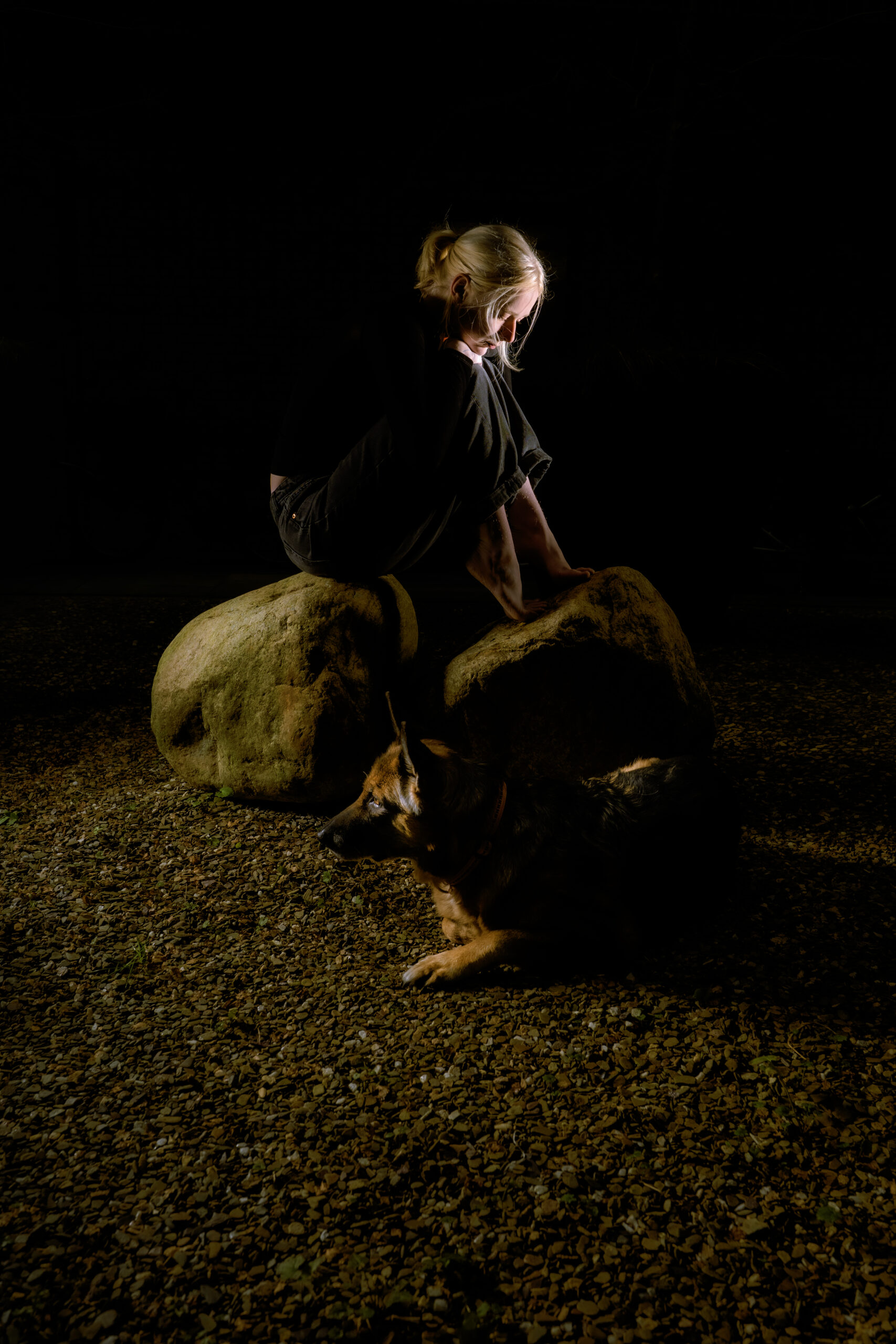
-What five elements do you consider essential for building a sustainable, long-term artistic practice—both creatively and practically?
Authenticity, drive, curiosity, community and support.
-Where do you see yourself artistically and personally over the next few years? Do you follow a defined plan, or do you prefer to let intuition guide your path?
I’m definitely more of an intuition guided person. I like seeing where things go, but I try to be consistent in what I go towards. I like to develop things and work together. Hopefully in these next few years, community will take a larger place in my life. I’ve become a member now of several collectives and I think to be artists in this world we need to support each other and draw from each other.
-How do you recharge creatively and emotionally?
To recharge creatively, I listen to others. I find most of my inspiration when I’m going to concerts, hearing, playing with people and experiencing new things and talking with other artists. I try to remember to be curious about things if I’m feeling out of battery, when I can’t find joy in what I usually find exhilarating.
I’m easy to cheer up. Funny dog videos on youtube do the trick.
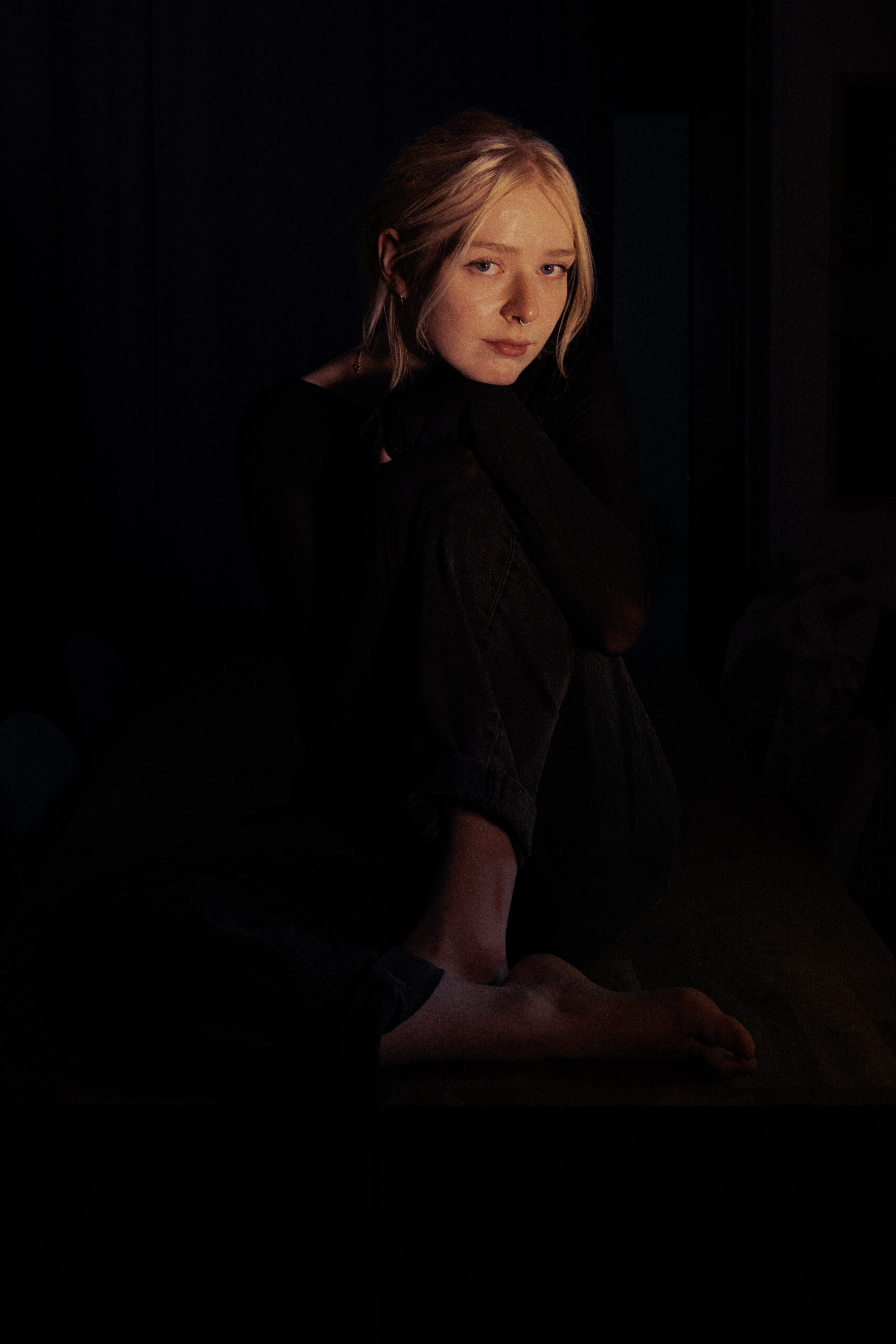
-If you could be reincarnated as a plant or an animal, what would you choose—and why?
I’d like to think of a plant or animal that always experiences new environments. In a lot of ways I feel connected to the waters, the fluidity, the clarity and the murkiness, the mysterious and the romantic about the waters. I was always, since I was little, very fascinated with the sperm whale. I think the shape of the animal appeals to me, and then I saw an animated movie about two sperm whales when I was about 6, it was called Samson & Sally. We had the movie on a VHS tape, and it really stuck with me. So maybe I would like to be a sperm whale. Or maybe I’d just be something more common, like a goose.
Photos by Roman Ermolaev
by WOW