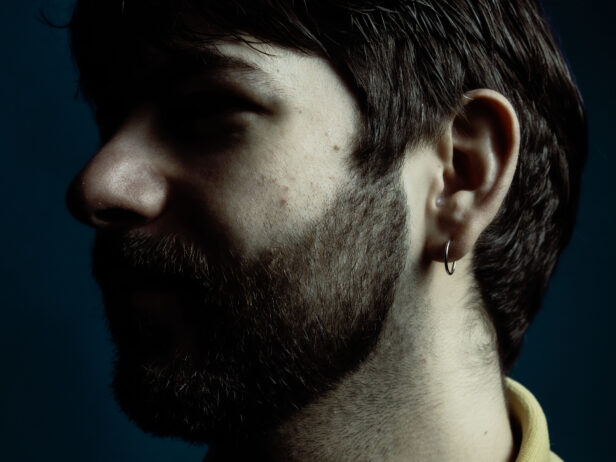
INTERVIEW WITH TASSOS Mallios
ARTIST IN RESIDENCE @ WOW lieven |
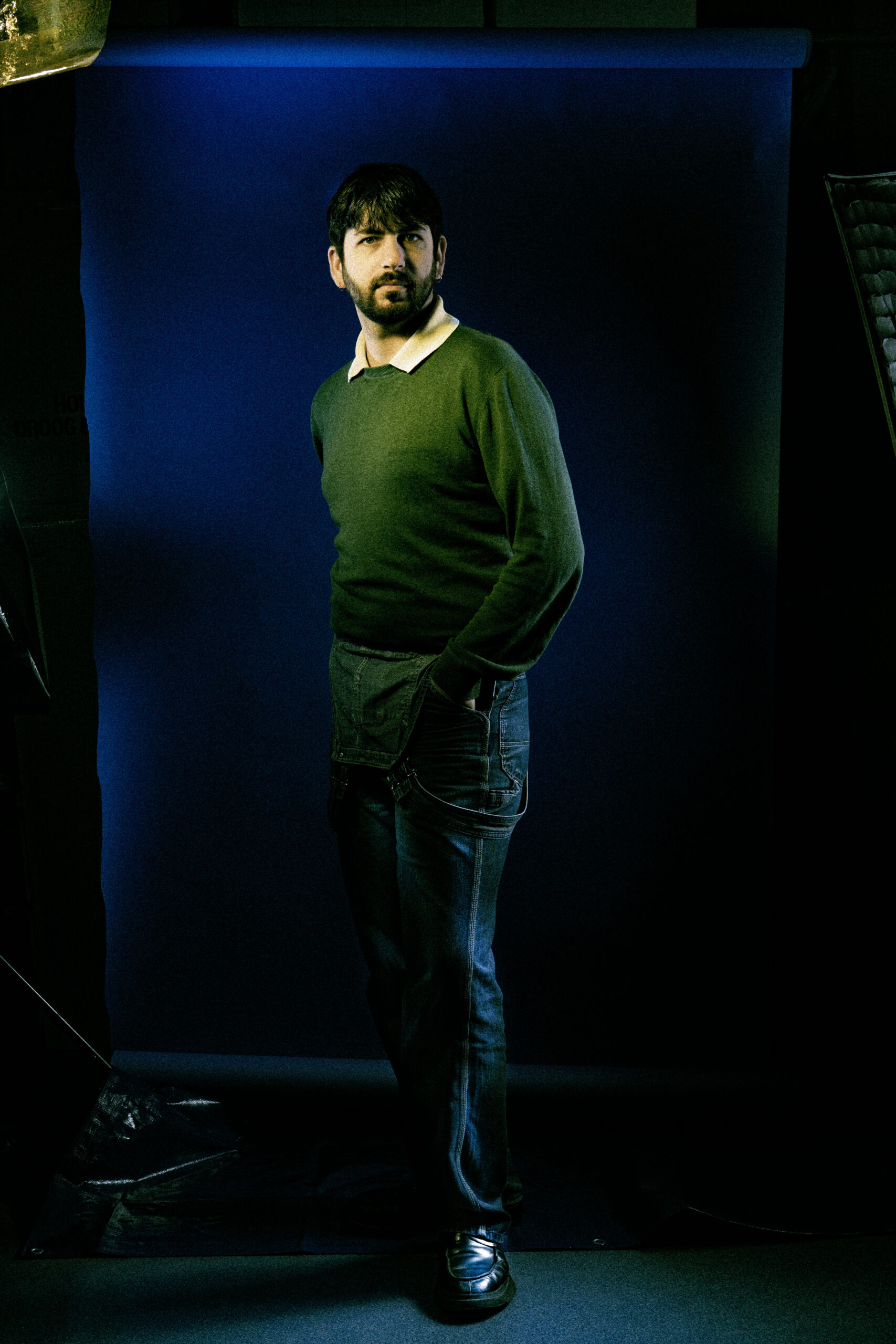
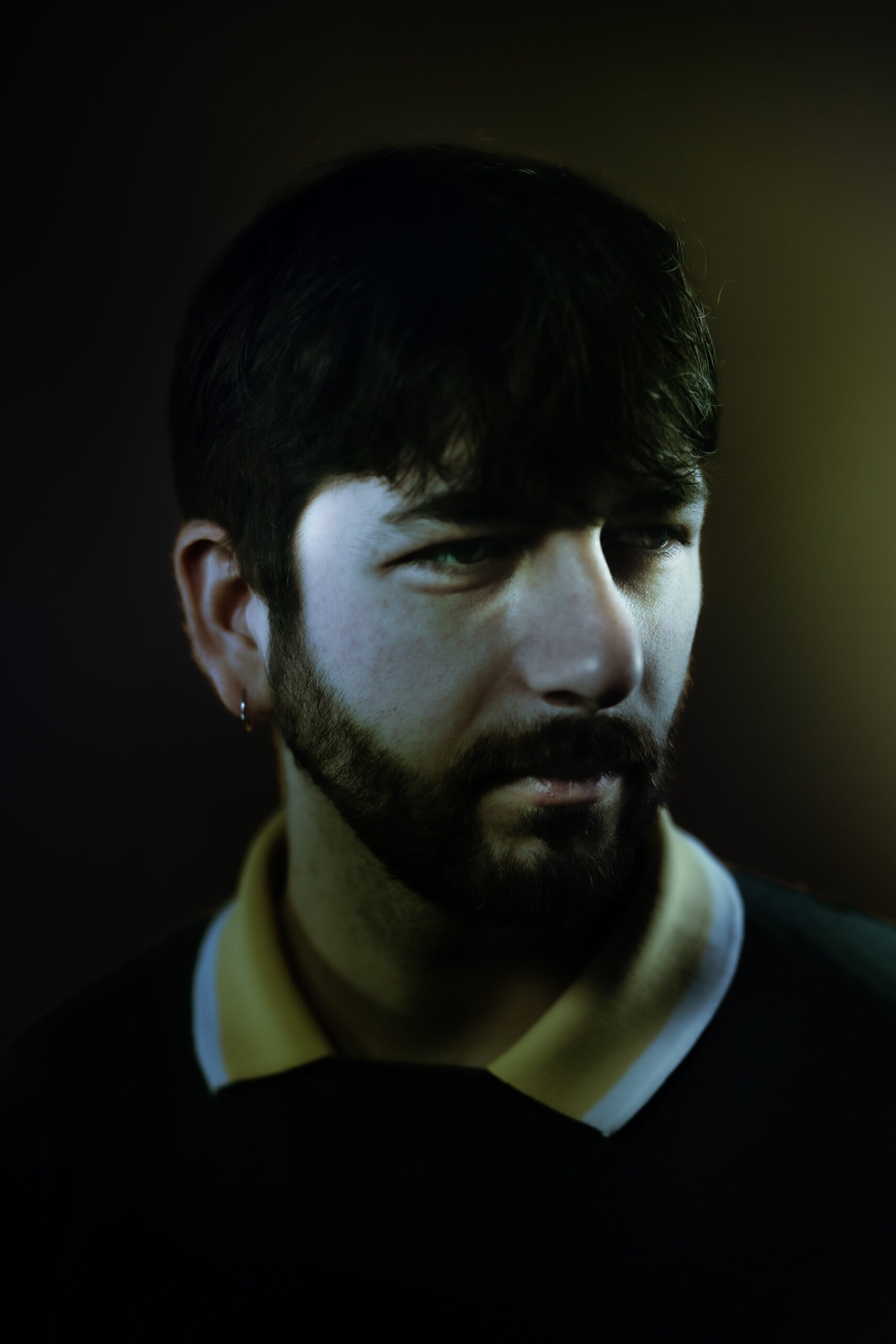
| Tassos Mallios is a film curator, festival worker and filmmaker with an academic background in international politics, communication and film analysis. Based between Amsterdam and Athens, he has collaborated with the programming and industry departments of leading film festivals and institutions such as IFFR, IDFA, Thessaloniki International Film Festival, Leiden Shorts and European Short Pitch, Drama International Short Film Festival, as well as with the content cluster of the European Commission’s Creative Europe MEDIA Programme. He has participated in several international talent development and professional training programmes, including Locarno Pro U30, the Thessaloniki Locarno Industry Academy, and the TSFM “What’s The Story?” workshop at the International Short Film Festival of Cyprus. He has directed two student short films and is currently developing his upcoming short documentary. |
– How would you describe your artistic practice today? What are the primary themes and questions driving your current work?
The single most recurring theme driving my practice derives from my academic background in political analysis and international relations. Across my work as a film curator and filmmaker I explore the relations of power particularly through the lens of material conditions, forms of privilege and broader critical theory. My primary questions revolve around the contestation of the status quo, the possibility of radical world-building that is ideologically and emotionally different to ours.
– Let’s be honest—your portfolio states (and I quote): “Tassos Mallios (1998) is a Greek photographer, filmmaker, and festival programmer with an academic background in International Relations, Communication, and Film.” Let’s play into Maslow’s hierarchy of needs: where do we begin, and where do we end?
Let us imagine a pyramid then, one that hides no mysteries or hidden corridors and definitely no skeletons; I hope. At its foundation we lose ourselves in a maze-like video store, an endless archive longing for its ephemeral resurrection. There lies my comfort zone and most basic need, the place I turn to for nurture and enlightenment. Going up the stairs we reach the study. There I attempt to put my thoughts on paper, contemplating, rewriting constantly, shaping concepts into narratives, into characters and timelines. Only there is no rooftop above, perhaps there is a terrace; Athens style. There, the lighting is always good. I let loose, with a film camera in my hand, capturing views, friends, strangers, life around me. Honestly, though, don’t quote me on any of that.
– Can you tell us about your festival work, step by step? How do you find festivals, how do you apply, what do you watch, and what do you actually do?
Film festivals are indeed a complicated landscape. As a programmer, I am tasked with curating the official selection of the festival. That is where the landscape becomes complex, as industry leading festivals expand their programmes beyond presenting new films to their audiences. Across a series of other initiatives addressed to industry professionals, projects are presented at various stages of development. My job involves reading synopses and treatments, scripts, and watching works-in-progress excerpts on top of finalised films for the curation of various festival programme sections across several festivals in Greece and the Netherlands.
– What are the top 5 films you’ve watched in the last five years?
➢ Notes Towards an African Orestes (1970), Pier Paolo Pasolini
➢ State Funeral (2019), Sergei Lonzitsa
➢ Unrelated (2007), Joanna Hogg
➢ Do Not Expect Too Much from the End of the World (2023), Radu Jude
➢ Megara (1974), Sakis Maniatis & Giorgos Tsemperopoulos
– We know that festivals can be an exhausting ride—and no one is getting younger. What is your advice to those quietly worrying about their knees?
Choose your battles. Identify the reasons you are attending the festival and stick to them, whether you want to gain knowhow and advice, entertain yourself, network or discover new works. The bigger the festival, the more chaotic and difficult it is to combine everything in one ride.
– As someone who acts like a lighthouse—highlighting treasures passing through the reefs—how quickly can you identify valuable “cargo”? And how often, retrospectively and with full remorse, do you realize you missed something important?
What drew me to this profession has always been my tirelessness and eye for detail. Having reviewed thousands of films over the years, it becomes easy to identify patterns, tendencies and make links between them. Hints of valuable “cargo” can be observed within minutes if not seconds. Yet again, you can always be positively surprised or disappointed until the final moment. Only once have I retrospectively realised I missed out on the chance to highlight a film that deserved better, at the first ever festival I curated for 5 years ago. Even though I had identified the quality of that film, I decided to invite it out of competition resulting in them rejecting our invitation. With time, the film stuck with me surprisingly longer than expected. As an experienced programmer now, such instances become all the rarer.
– Going back to your practice—are you going back to your practice?
That is a question I often ask myself. Turns out balancing two career paths is not as easy as it seems. The more I progress as a curator the less time I have for my own filmmaking practice, even though I have never felt more inspired that right now. Barely having enough time outside of work, let alone enough time to create, my two shorts in development have stalled. Hope to finish the first of them by next year, while applying for funding to proceed with the production of the other right after.
– Can you share more about your current projects? What are you working on now, and what new directions are you exploring?
At the moment I am involved with six different film festivals across two countries, International Film Festival Rotterdam (IFFR), International Documentary Festival Amsterdam (IDFA) and Leiden Shorts in the Netherlands as well as Thessaloniki International Film Festival, Drama International Short Film Festival (DISFF) and Anafi International Film Festival in Greece. I am mainly involved with curating short and mid-length films and reviewing feature films and documentaries in development. As far as my own film is concerned, I am working on an experimental short doc that unravels an associate exploration of the immersion of contemporary Greek politics into the vortex of late capitalist neoliberalism. What started as a study of police brutality has developed into a broader research into the mechanisms of concentrated political power in Greece.
– What are your thoughts on the Amsterdam art scene? How has being part of WOW Lieven shaped your artistic perspective or professional network?
Trapped in my film industry bubble, I rarely transgress to the world of other disciplines. Certainly not as much as I would have loved to. Being part of WOW Lieven has allowed me to burst that bubble all the more often, expanding my professional network and making meaningful connections.
– Financial sustainability is a major concern for independent artists. How do you navigate this challenge while staying true to your political and artistic values?
Financial sustainability is a major concern for the cultural sector, faced with drawbacks in public funding and the domination of retrograde narratives attempting to limit its political potency. Film festivals, in particular, have been tremendously affected by recent developments given their precarious economic model and heavy reliance on external financial support. Film programming is, unfortunately, used as a scapegoat for the underwise silence and apathy shown at the leadership level of such leading institutions. On one hand, this results in programmers’ curatorial freedom remaining for the most part intact; yet, our work feels all the more hypocritical when faced with the actual impact it has on the world.
– What five elements do you consider essential for building a sustainable, long-term artistic practice—both creatively and practically?
Shamelessness, honesty, integrity, originality, and discipline.
– Where do you see yourself—artistically and personally—over the next few years? Do you follow a defined plan, or do you allow intuition to guide your path?
I love me a nicely defined plan, not gonna lie. At times I plan years in advance, perhaps affected by the natural cycle of the film industry if not trapped in it. Over the next few years I see myself leaning more towards my filmmaking practice and less into my festival work, opting for less but higher paid senior programming positions.
– How do you recharge creatively and emotionally?
Listening to music or exploring nature. Watching films could also be a fitting answer, but there truly are times where I do not have any more capacity to digest a film.
– If you could be reincarnated as a plant or an animal, what would you choose—and why?
A nettle, hands down. Stinging people is fun; plus, I’d make for a great pie.
Photos by Roman Ermolaev
by WOW